
Why Does Cholesterol Rise With Age?
It's common for cholesterol to rise as we get older, and seeing this for the first time in your own results can be unsettling, especially if nothing about your diet or lifestyle has really changed. It's natural to wonder what's driving it, and what you can do about it. Diet plays an important role in healthy cholesterol metabolism.
Understanding Cholesterol and LDL
Cholesterol has something of an image problem, given how essential it is. It's a building block for your cell membranes, a raw material for hormones like oestrogen and testosterone, and something your body needs to make vitamin D and bile acids for digestion.
Because cholesterol is fat-based and blood is largely water, it can't simply float through your bloodstream on its own. It needs a courier. That's where lipoproteins come in: LDL, or low-density lipoprotein, carries cholesterol out to the cells and tissues that need it, while HDL, or high-density lipoprotein, makes the return trip, collecting what's left over and bringing it back to the liver.
Most of your cells can make their own cholesterol as well as take it up from the blood, so the liver isn't single-handedly supplying the whole body. What it does uniquely is produce the bulk of the body's cholesterol overall, packaging the surplus into LDL for tissues with higher demand, like the adrenal glands and reproductive organs. It also works the other way, pulling LDL back out of the blood through receptors on its surface. That clearance system is the one that matters once we look at what changes with age.
Your liver has a second job too: getting rid of cholesterol you don't need. It converts it into bile acids, sent into your gut to help digest fat. Most of these get reabsorbed further along and recycled, but some leave the body in stool, taking that cholesterol with them for good. Hold onto that detail, because it's exactly the mechanism soluble fibre works through, and we'll come back to it.
LDL gets so much attention because of what happens when there's too much of it circulating. The more LDL in your blood, the more likely some of it is to work its way into artery walls. Over time, that build-up, known as atherosclerosis, narrows and stiffens the arteries, and it's one of the most well established risk factors for heart attack and stroke.
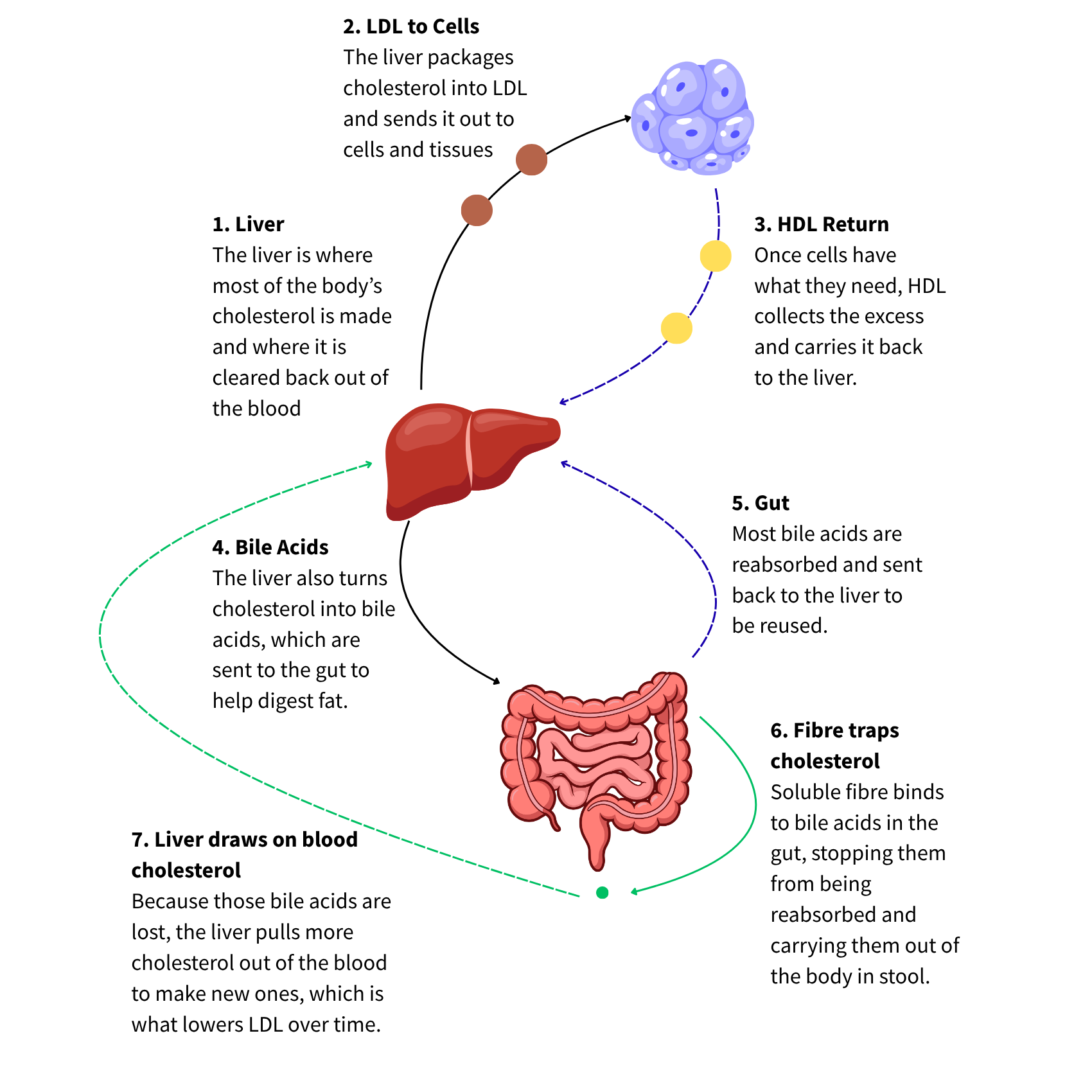
The cholesterol cycle, and where fibre can help.
Why Does Cholesterol Rise With Age?
The mechanism behind this comes down to clearance. Your liver removes LDL from the blood using receptors on its surface, and how active those receptors are depends partly on hormones that decline with age.
In women, this is closely tied to oestrogen. Oestrogen supports your liver's production of LDL receptors, so as oestrogen declines through the menopause transition, your liver's capacity to clear LDL declines with it, and LDL rises as a result. It's a big part of why cardiovascular risk climbs noticeably in the decade after menopause.
In men, the shift is more gradual and isn't tied to one single hormone. Several hormones involved in metabolism decline steadily from midlife onwards, and together they're thought to drive a slow upward drift in LDL over the same period, rather than the sharper change seen around menopause.
Either way, the underlying story is the same: a hormonal shift that leaves your liver clearing less LDL from your blood than it used to. In women that shift tends to be sharper and tied to menopause; in men it plays out more gradually over midlife.
Does Diet Affect Cholesterol? Dietary Fat and LDL
Higher intakes of saturated fat are consistently linked to higher LDL cholesterol. It's why foods like butter, fatty cuts of red meat, and processed meat come up again and again in this conversation. [1,2]
Look closer, though, and the picture gets more interesting. Not all saturated fat behaves the same way in your body. Lauric acid, myristic acid, and palmitic acid are the ones most consistently shown to raise LDL, and they make up the bulk of what's in butter, fatty red meat, processed meat, coconut oil, and palm oil. Stearic acid is the exception: it has a largely neutral effect on LDL, which is part of why dark chocolate doesn't raise cholesterol the way its saturated fat content might suggest. Cocoa butter's fat is roughly a third stearic acid and a third unsaturated oleic acid. [3,4]
Fermented dairy is another exception worth knowing about. Yoghurt and kefir don't seem to raise LDL the way other saturated fat sources do, despite their saturated fat content. [5] They bring other benefits too: live bacterial cultures that support gut health, a good source of vitamin K2, and in observational studies, higher intake has been linked to a lower risk of type 2 diabetes. For most people who can tolerate dairy, they fit comfortably into a balanced diet.

None of this means cutting these foods out. It's about limiting the ones that raise LDL rather than avoiding them altogether. UK dietary guidelines recommend keeping saturated fat to no more than around 10% of your total daily energy intake. [1] Processed meat is the exception: it's linked to other health risks too, so it's worth avoiding as much as possible. Beyond that, it's more a question of how often and how much, rather than treating anything as off-limits. Leaner cuts of meat most of the time, butter some days and olive oil on others.
Where the evidence is strongest is in swapping saturated fat for unsaturated fat, rather than simply eating more fat of any kind. [6] Oily fish, nuts, seeds, olive oil, and avocado are good ones to build meals around. Try cooking with olive oil instead of butter, having salmon or mackerel instead of meat a couple of times a week, or adding a handful of walnuts or almonds to your breakfast.
How Fibre Lowers Cholesterol
Soluble fibre works through your gut rather than your bloodstream directly. It binds to bile acids there, the compounds your liver makes from cholesterol to help digest fat, and carries them out of the body before they can be reabsorbed. Because your liver needs cholesterol to keep replacing what's lost this way, it pulls more out of your blood, and LDL comes down as a result. [7]
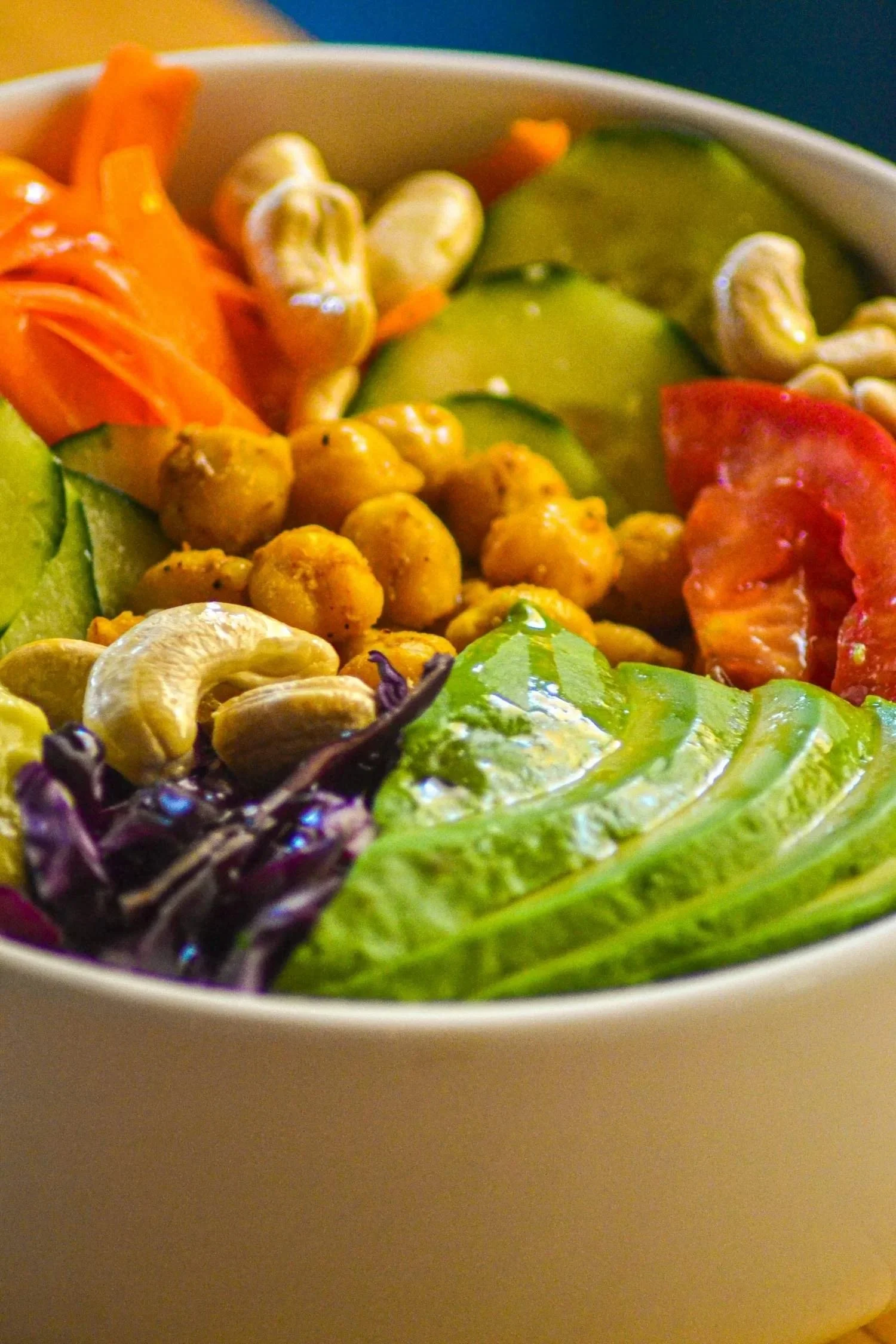
Oats, barley, wholegrains, flaxseed, nuts, beans, and lentils are your best sources. Swap white bread, rice, or pasta for wholegrain versions. Stir a spoonful of ground flaxseed into porridge, yoghurt, or a smoothie. Keep almonds or walnuts around for snacking. Work beans and lentils into meals you already make: bulk out a bolognese or curry with lentils, or add chickpeas to a salad.
Key Takeaways
How much LDL ends up circulating in your blood is something diet has meaningful influence over, even though the hormonal shift behind rising cholesterol isn't something diet controls. Three changes carry the clearest evidence: paying attention to the type of saturated fat you eat, choosing unsaturated fat where you can, and building in soluble fibre regularly.
Sources
1. Scientific Advisory Committee on Nutrition. Saturated fats and health. 2019.
2. Hooper L, et al. Reduction in saturated fat intake for cardiovascular disease. Cochrane Database of Systematic Reviews. 2020.
3. Effect of Cocoa Beverage and Dark Chocolate Intake on Lipid Profile in People Living with Normal and Elevated LDL Cholesterol: A Systematic Review and Meta-Analysis. MDPI. 2023.
4. Zong G, et al. Intake of individual saturated fatty acids and risk of coronary heart disease in US men and women: two prospective longitudinal cohort studies. BMJ. 2016.
5. Fermented dairy product consumption and blood lipid levels in healthy adults: a systematic review. Frontiers in Nutrition. 2025.
6. Hart TL, et al. Dietary Polyunsaturated to Saturated Fatty Acid Ratio as an Indicator for LDL Cholesterol Response: A Systematic Review and Meta-Analysis of Randomized Clinical Trials. Advances in Nutrition. 2025.
7. Joyce SA, et al. The Cholesterol-Lowering Effect of Oats and Oat Beta Glucan: Modes of Action and Potential Role of Bile Acids and the Microbiome. Frontiers in Nutrition. 2019.